
At their Kremlin summit, leaders of the Collective Security Treaty Organisation (CSTO) -- comprising Armenia, Belarus, Kazakhstan, Kyrgyzstan, Russia, Tajikistan and Uzbekistan -- signed an agreement for the creation of RAF under a joint command.

India as the G20 host has a 'unique role' to play in bringing about an end to the war in Ukraine due to its 'longstanding historical' ties to Russia, the United States has said, expressing hope to work closely with New Delhi to find a way to stop the conflict.

Prime Minister Manmohan Singh on Friday held talks with US President Barack Obama, the first bilateral summit meeting after nearly three years.

This is the joint statement issued by the ministry of external affairs on the visit of US President Barack Obama to India.

'The clean break between Russia and Europe that this foolish attack is creating may actually last long.' 'It will undermine Europe and benefit the US and China.'

In first high-level engagement between India and Russia after National Democratic Alliance government came to power, External Affairs Minister Sushma Swaraj and Russian Deputy Prime Minister Dmitry O Rogozin on Wednesday held extensive talks on crucial bilateral issues including trade and energy security.
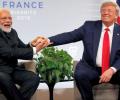
'The US President is joining the Prime Minister in addressing a huge Indian diaspora event in Houston and they will also meet on the margins of the UNGA in New York'
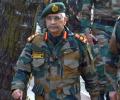
The commanders will also deliberate on the overall situation in Jammu and Kashmir besides delving into issues having national security implications, they said. However, the main focus will be on the situation in eastern Ladakh where Indian and Chinese troops are locked in an eyeball-to-eyeball face-off in Pangong Tso, Galwan Valley, Demchok and Daulat Beg Oldie, the sources said.

With Shanghai Cooperation Organisation set to admit India and Pakistan amid growing rancour over their Nuclear Supplies Group membership bid, a Chinese state-run daily expressed concern on Friday that the hostility between them may have a "negative effect" on the security grouping.

'When armies start attacking with clubs and batons, then at some point this can take an escalatory spiral and spin out of control.'

'New Delhi showed itself willing -- at least for a period -- to tolerate the risk of conflict and to withstand Beijing's implicit and explicit threats.' 'But it also continued to try to cut some kind of deal with China to reduce tensions.'
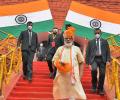
According to the details provided by Muraleedharan, the prime minister made five visits each to the United States, Russia and China, and multiple trips to some other countries like Singapore, Germany, France, Sri Lanka and the United Arab Emirates.

If China's behaviour in the past on ticklish issues is any indication then China could eventually support India's NSG application, says Rup Narayan Das.

"As Prime Minister (Narendra) Modi said in his latest campaign, 'Modi hai to mumkin hai,' or 'Modi makes it possible', I'm looking forward to exploring what's possible between our people," Pompeo said in his major India policy speech at the India Ideas Summit of US-India Business Council on Wednesday.

Praising the 'frank and business-like atmosphere' of the summit, the Russian leader said he considered the talks 'very successful and useful'.
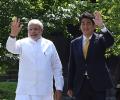
Japanese PM Shinzo Abe will arrive in New Delhi on Friday on a three-day visit to hold annual summit with a focus on forging greater synergies between the two nations.

China on Monday said India's membership bid in the NSG has become "more complicated" under the "new circumstances" as it again ruled out backing New Delhi's entry in the grouping, saying there should be non-discriminatory solution applicable to all non-NPT signatory countries.
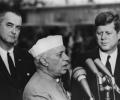
As Prime Minister Narendra Modi begins his historic visit of the United States of America, here's a look at some landmark visits by Indian prime ministers to the United States of America.

The trilateral AUKUS security alliance complements partnerships like Quad and there was a "very warm embrace" of the deal by India and Japan as both the countries totally understood and supported what it is seeking to achieve, Australian Prime Minister Scott Morrison said on Thursday.
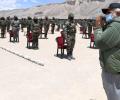
'By not even acknowledging China's occupation of Indian territory Modi signalled to Beijing that he was not prepared to used forceful means to vacate the Chinese occupation, and that his government was reconciled to this loss of territory and accepted the fait accompli engineered by the PLA.'

China continues to hold out on fingering Pakistan as the 'mothership of terror,' declaring Masood Azhar a terrorist at the UN, and India's membership of the NSG, says China expert Srikanth Kondapalli.
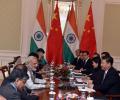
External affairs ministry spokesperson Vikas Swarup also asserted that India's participation in the NSG would have further strengthened nuclear non-proliferation regime and made global nuclear commerce more secure.
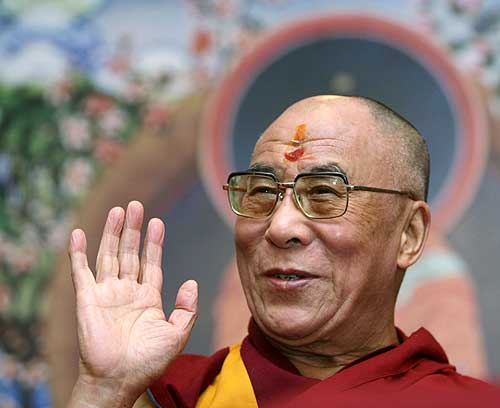
'The first time that China alleged the Dalai Lama was 'anti-national' and 'unpatriotic' was after he affirmed that Arunachal Pradesh and Tawang are part of India,' points out former RA&W official Jayadeva Ranade.

Politicians, bureaucrats hold different opinions about the delaying of the 2+2 summit.

'The sanctions are biting him.' 'He also has a chance to come out into the world and reshape his nation.'

His remarks without naming any country came against the backdrop of tension between India and Pakistan after New Delhi revoked Jammu and Kashmir's special status.
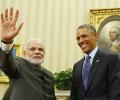
With their landmark 2005 civil nuclear deal still in limbo, India and the United States have established an inter-agency contact group to sort out outstanding liability and technical issues to fast-track its full implementation.
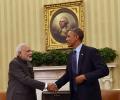
Furthering Indo-US cooperation on terrorism, Prime Minister Narendra Modi and President Barack Obama on Tuesday agreed to make "joint and concerted efforts" to dismantle safe havens for terror and criminal networks like Lashkar-e-Tayib, Jaish-e-Mohammad, Dawood-company, Al Qaeda and the Haqqani network.

It was clear in Brunei at the 8th East Asia Summit that China doesn't want the South China Sea issue to even dominate the discussion, reports Sheela Bhatt, who is part of the prime minister's media contingent to the summit

On the final day of Prime Minister Narendra Modi's visit to the US, that country on Tuesday extended its Defence Cooperation Agreement with India by another 10 years. The pact, which was to expire in June next year, will now be in force till 2025.
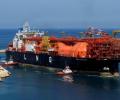
The dreary, cold months from December to February may prove to be the undoing of many a nation as they grapple with sky-high fuel prices - a result of the Ukraine conflict and the pandemic. Many - Europe, South Korea, Japan, and China - will still pull through on the strength of their wealth or because of strong storage infrastructure. But India will have its back to the wall. Signs of liquefied natural gas (LNG) rates hitting new records this winter are already evident.

Moon Jae-in's visit will play a crucial role in exploring complementarities between India's Act East policy and South Korea's New Southern policy, says Dr Rahul Mishra.
The United Nations Security Council on Thursday unanimously adopted a resolution asking all non-Non Proliferation Treaty states to join the treaty at an unprecedented summit chaired by United States President Barack Obama who signalled that these countries, which include India, must come on board.
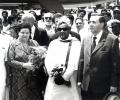
'I was present at a meeting where he decided to permit the IAF to strike at Pakistan positions in Kargil, with the caveat that they should not cross the LoC.' 'Confident that the Indian Army would succeed, Mr Vajpayee was positioning himself to tell the world after the Kargil conflict was won that India did not violate the 'sanctity' of the LoC,' recalls Ambassador G Parthasarathy, who served as India's envoy in Islamabad in that eventful year, 1999.
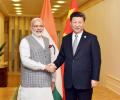
'At the informal summit, the two leaders will have heart-to-heart discussions on overarching issues and try to build mutual trust'

This is Kim's first overseas visit since he took over power in 2011 after his father's death.
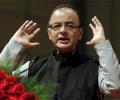
FM said every major terrorist incident in the world has a 'Pakistani footprint' around it.

A weaker Russia, a sobered China at a time when Xi Jinping is manoeuvring to protect his third term prospects, a reunited West, a chaotic Pakistan. This is a perfect set of strategic circumstances. It is for India now to consummate this historic opportunity, argues Shekhar Gupta.
